
Visiting Glacier National Park in Late Spring (Late May - Early June)
Updated: Jun 13
Glacier National Park is a magical place with experiences for all comers. In Glacier, there is something for everyone in every season! However, the experience changes dramatically from season to season. Here are some things we learned from our visit to Glacier in Late Spring 2026 (the last week of May and the first week of June).
When is Spring?
In North America, there are three ways to define spring: astronomical, meteorological, and phenological.
Astronomical Spring
There is the Astronomical Spring, which begins on March 20/21, based on the vernal (spring) equinox, when day and night are equal, and ends around June 20/21, the start of the summer solstice.
Meteorological Spring
The Meteorological Spring, which is defined by the monthly calendar, includes March, April, and May.
Phenological Spring
Finally, there is the Phenological Spring, which refers to "when it feels like spring" or when you start to see real-world changes of spring, which can depend on where you are in the world. According to the National Phenology Network (USA NPN), spring 2026 is the earliest spring start on record (since 1981) in some states, including Montana.
The National Phenology Network defines the beginning of spring by the first new leaves on trees and the first crocus plants to bloom, referred to as "First Leaf" and "First Bloom". They also have a late-bloom index, which tracks when plants that typically bloom at the end of spring begin to flower. For more details about this year's spring, visit the "Status of Spring" article by the NPN, which is complete with many active maps of spring across the country.
Embracing the Beauty of Springtime in Glacier National Park
Spring in Glacier is highlighted by an abundance of blooming flowers, booming waterfalls, and verdant growth. If you enjoy cooler temperatures, fewer crowds, and aren't afraid of getting a little wet, then this may be the perfect time for you to visit!
Challenges of Visiting Glacier NP in Spring
Traveling between West and East Glacier
There are some "downsides" to visiting Glacier in spring, namely that the main road in the park, the Going-to-the-Sun Road, which connects West and East Glacier, does not fully open for driving until at least late June. This road connects St. Mary on the East with Apgar Village and Lake McDonald in the West.
This road does not fully open at a set time each year. The opening depends on various factors, including average spring temperatures, average spring rainfall, daily sunlight, and winter snowfall. Glacier National Park Service updates the road status as it opens to the public on its "Current Conditions" page.
The Going-to-the-Sun road opens in sections starting in early spring. When we visited during the last week of May and the first week of June, the western portion of the road was closed after Avalanche Creek/Trail of the Cedars Camping and Parking areas. On the east side, the road was open to Jackson Glacier Overlook.
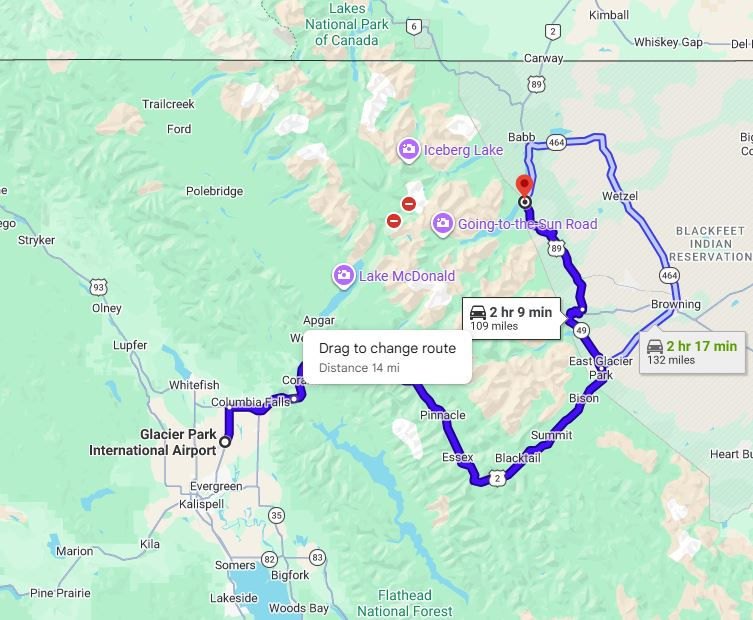
This means that to visit both West and East Glacier, you would need to drive the long way around the outside of the park via scenic Highway 2, Highway 49, and Highway 89.
The positives:
I actually really enjoyed the drive from West Glacier to East Glacier and back, so much so that I feel I would have missed out had we not taken this adventure.
There are fewer people in the park because most delay their visit until the Going-to-the-Sun Road is entirely open.
**For more information on traveling between West and East Glacier when Going-to-the-Sun Road is partially closed see my post about "Traveling from West to East Glacier, it's NOT just Going-to-the-Sun Road".
The Weather
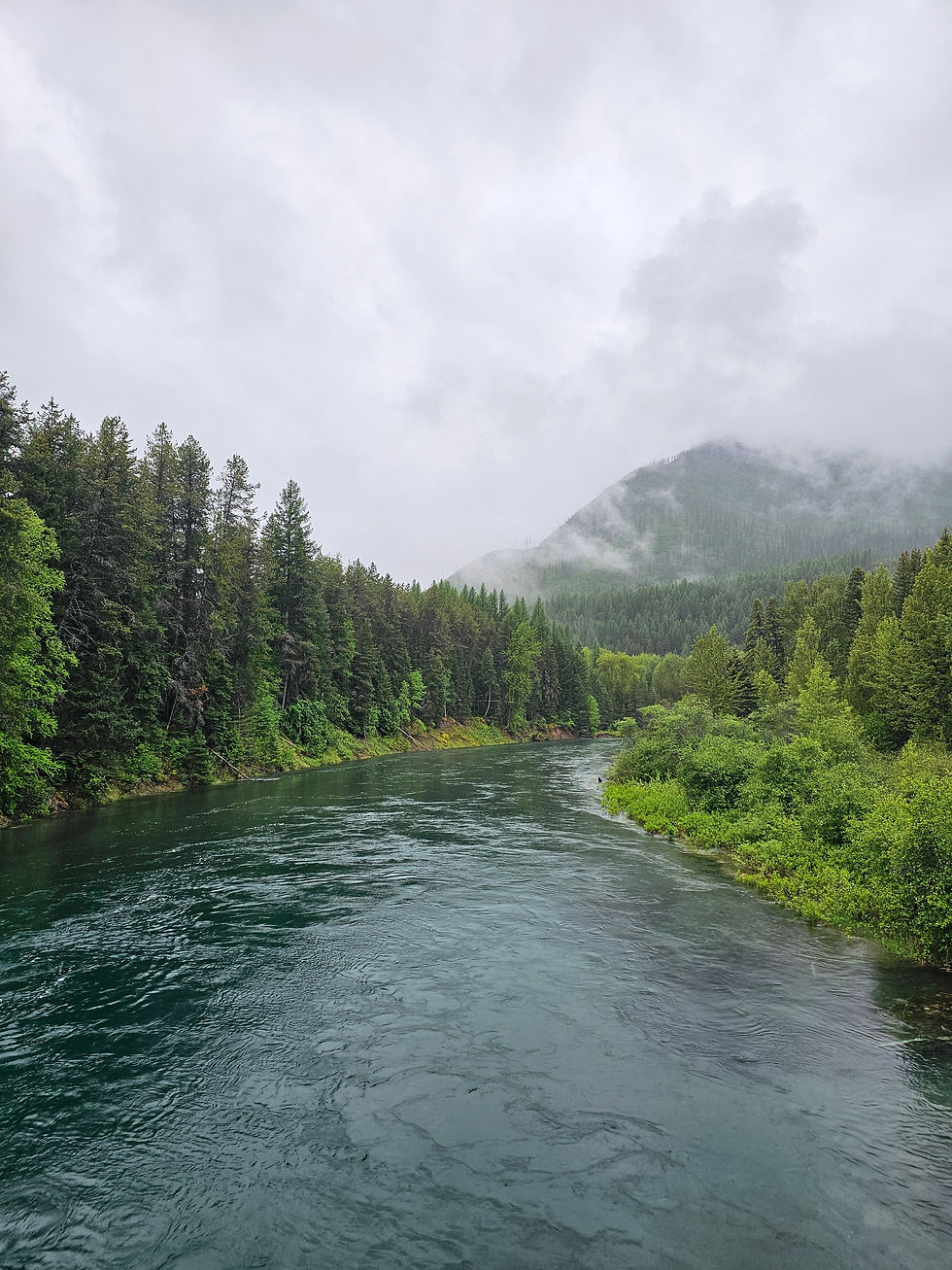
During our trip, northern Montana was receiving an abundance of rain, so much so that the area was under a flood watch when we first arrived, and a storm came through that night, taking out our power. While we were there, it rained on at least half the days. Thankfully, we had brought good hiking rain jackets and water-resistant hiking boots. I would additionally suggest bringing a backup poncho or water-resistant pants if you are concerned.
What we learned about rain in the park is that Glacier is so big that one area may be raining while the other side of the park might be sunny. One day, we drove out of Whitefish and saw rain moving through West Glacier as we drove by. However, when we arrived at East Glacier, we found that the clouds had largely dissipated, leaving only a light sprinkle with bouts of sunshine.
The positives:
The rain was so beautiful. Seeing the mountains peak in and out of the clouds was magical in its own way. We were blessed to see the park in both rain and shine, two of its many beautiful faces. Photos were also beautiful in the rain; the verdant undergrowth really pops.
The Pollen
On my list below of the amazing perks of visiting in the spring, my top perk is the flowers. However, there is a downside to the verdant growth that you see in the spring, and that is the abundance of pollen. Although I love nature, I do suffer from allergies, which is something to take into account if you are visiting Glacier in the spring. I recommend pre-medicating if you are at all sensitive to pollen.
Amazing Perks of Visiting in the Spring
Flowers and More
There are so many flowers that bloom in Glacier in the Spring. We found native flowers all over the park, and even around our Airbnb near Whitefish (forget-me-nots). There are some excellent books out there that help you differentiate the different kinds of flowers you can find. The book I used was “Wildflowers of Glacier National Park and Surrounding Areas”, by Shannon Kimball and Peter Lesica. Some of the flowers we found included: Roundleaved Yellow Violet, Rosy Pussytoes, Kinnikinnick, Oregon Grapes, Prickly Rose, Silky Lupine, Silky Phacelia, Blue Clematis, Virginia Strawberry, and more. I am especially excited about finding a cluster of Mountain Lady's Slipper, right off the side of the road in Glacier.
There is also a lot of new growth on the trees and on wetter days there was abudant mushroom growth. Remember, finding flowers and plants is best remembers with a photograph, not with picking or damaging the plant, so they can be enjoyed by other visitors to the park.

Lower volume of people
Glacier National Park is BIG; however, the number of parking opportunities does not correlate well with its size. If you are going to a popular hiking spot like Avalanche Lake, be prepared to park further away and hike further in, get there early in the morning, or drive around for up to an hour looking for parking.
The earlier in the season you are, the more likely the crowds will be smaller. Another factor to consider is the weather. On a drizzly day, fewer people will likely be out, which will free up the parking. As I mentioned above, rain is a good look on Glacier; hiking in the rain may lead you to experience a beautiful area in an entirely new way, and seeing the clouds part for a moment to reveal a peak makes the view all the more special.
Abundant Wildlife
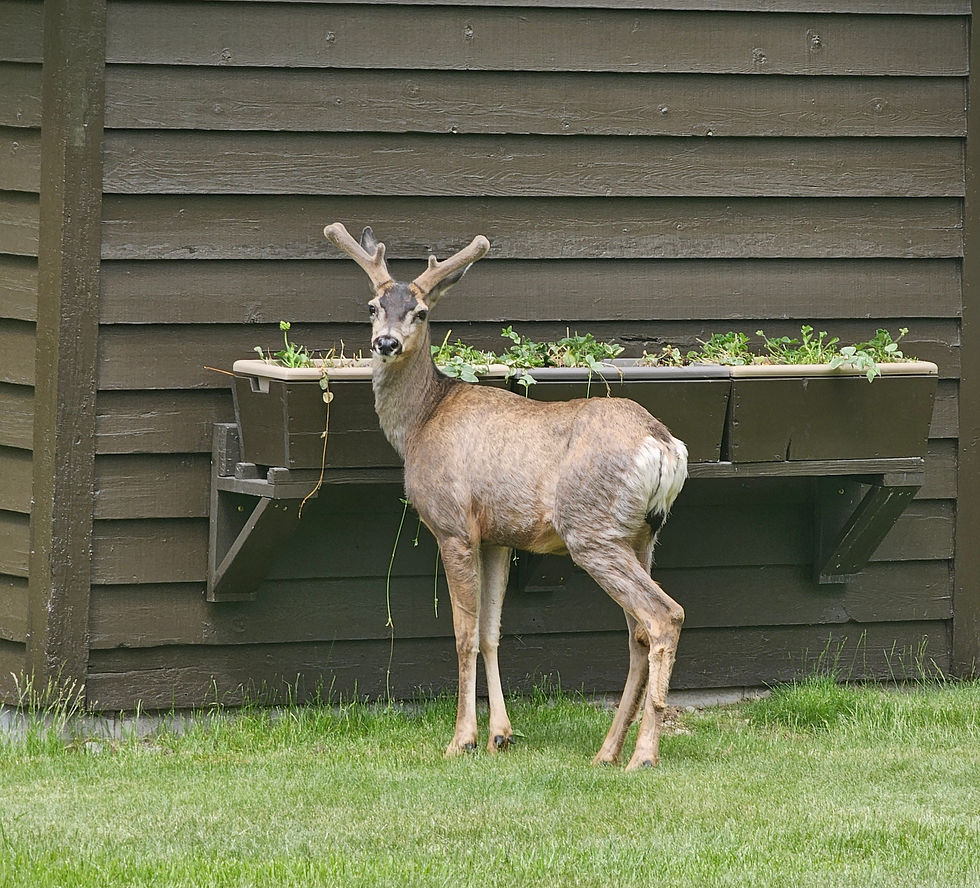
In spring, many of the native wildlife species become more active, mirroring the new growth of plant life. We saw many deer, both mule and white-tailed, Columbian ground squirrels, chipmunks, a black bear, and many mountain goats (including a baby).
While we were in the park, most of the animals we saw were on less-used paths. For example, we saw a black bear and two deer within 5 minutes of each other while we were walking on the John's Lake Trail, heading from the parking lot to the lake, probably within 15 minutes of starting our trail.
When it starts to get warmer outside (summer), many animals become harder to find in the middle of the day, so we were happy that temperatures were cool enough to let us see wild animals throughout the day.
Cooler Temperatures
This is probably a challenge for some and a positive for others, depending on where you are coming from when you arrive at Glacier. We were flying from Texas, and a non-native Texan, the cooler temperatures while we were in Glacier were a welcome change. It is important to note that the temperature can vary significantly within a small area depending on your elevation.
We stayed at an Airbnb outside the park in Whitefish, MT, and the temperature during our week there ranged from a low of 38°F to a high of 89°F. West Glacier temperatures near Apgar Village stayed in a similar range. In East Glacier, near St. Mary's, temperatures ranged from a low of 36°F to a high of 82°F. The lowest high in West Glacier was 51 degrees, and the lowest high in East Glacier was 43 degrees F. These temperatures may seem very similar, but if you compare sside-by-side maps oftemperatures across different areas of the park, you will see that you may need more layers or a better windbreaker depending on the area.
Changing weather led to amazing photographs.
From what I heard from the park rangers, the weather in Glacier can change frequently in the spring, more so than in the summer. This led to amazing photographs. On the same day, you could see the same mountain shrouded in wispy rain clouds, then crystal clear with the sun shining on its slopes. Spring seems to be a very dynamic season in Glacier, allowing one to experience the park in all its glory.
Thank you for reading about my attempt to describe the majesty and the challenges of visiting Glacier National Park in the Spring. I hope this article helps you feel more confident about visiting Glacier National Park in Late Spring. All seasons in this park are magical, and I can only speak to my own experiences.
Happy adventuring!

Comments